|
Local folklore shares that giants once roamed the islands. Located on the northeast side of Panay, this group of islands is a popular beach destination in the province of Iloilo. Hopping around its islands for a day will give the thrill of enjoying the beauty of white sand beach spots while extending a hand to the community-led tourism project of Islas de Gigantes.  Getting a little sun and sea on the islands of Islas de Gigantes. The islands were first called Sabuluag, named after the tree that grows endemic to the place. It was during the Spanish-period that the name was changed to Gigantes. This was the time when stories of coffins found inside the Bakwitan Cave containing gigantic human skeletal remains. It was this discovery that led locals to believe that the islands were also home to “engkantos”. At present, Islas de Gigantes continue to enchant its visitors with its beautiful beaches. There are day trips offered and you may contact Rhett Paul Gigantes Island Tours and Services on their FB page for details of their services. I was impressed that local travel operators actively involved the community in its tourism efforts. It is great way to go island-hopping that comes with a purpose. Cabugao Gamay Cabugao Gamay is the tourism icon of Islas de Gigantes. This is where you will find the most popular overlooking view of the white sand strip and a small hill at the end of the island. Due to its popularity, expect tourists to flock and to take their time at the vantage point for that socmed-worthy shot. The good thing about its tourism management is that travel operators are sequenced as they arrive on the island so there is no need to get ahead because everyone will get their turn to get their photos.  Cabugao Gamay is the tourism icon of Islas de Gigantes. Cabugao Island is one of three major islands of the chain. It is only half a kilometer in length marked by two rock formations on both ends. A white sand beach strip connects both rock formations creating a coast like a sandbar connecting two islets. The rock formations on one end of the island serves as a vantage point where you can see a picturesque view the island with the turquoise waters of the Visayas Sea in the background.
The white sand strip boasts of coastlines on both sides. The calmer side is where boats dock and where it is safer to take a dip. You can find your own spot under one of the coconut trees of the island where you can enjoy the sea breeze and seascape while enjoying a light snack. But here is a fair warning… the waters will be tempting that you can’t help but enjoy a quick dip under the hot gaze of the sun. Bantigue Sandbar Just a short boat ride away from Cabugao Gamay is Bantigue Island that is known for its sandbar. The sandbar emerges during low tide so timing your visit is crucial to enjoy its sandbar that stretches towards the other islands of Islas de Gigantes. A small resort on the island rents out cottages to visitors who wish to stay longer on the island.
Unfortunately, we dropped in on Bantigue Sandbar during the high tide and the sandbar was under the sea. Only the portion close to the island was visible and we only got a peek of its cream-colored sandbar. With nothing much to see, we opted to just take a quick dip at the sandbar and enjoy its waters. Antonia’s Beach Located on one of the bigger islands of Islas de Gigantes, Antonia Beach is a perfect beach spot to chill down. It probably got its name from a resort with the same name. Boasting with white sand coasts on two sides of its beach strip, this island stop lets you enjoy the beach while indulging in fresh seafood.  Antonia's Beach was another beauty. Its rock formations add drama to its seascape. This beach spot is bordered by a hill on one end and a rock formation on the other. A white sand beach strip connects both ends. The strip has two beach fronts that you can choose from. There are huts along the strip where you can take shade or you can just choose to enjoy the beach vibe under the shade of coconut trees in the area. There are stores in the area that sell fresh seafood for a quick snack. You must try their scallops that come in a VERY affordable price.
The rock formation on the other side adds a dramatic flair to the seascape of this beach spot. The flat rock formations stacked together stands in contrast with the soft aquamarine hues of the waters of the beach. It was a perfect spot for a nice beach shot where the beach’s rugged vibe fuses with its calm waters. Little Boracay Little Boracay is a small cove along the rocky coastal cliffs of Islas de Gigantes Sur. Our guides shared with us that it got its name because the cove has the powdery white sand that is the same texture as that of Boracay’s. We came in during the high tode so only a small part of the cove and rock formations were accessible to tourists.
I was intrigued by the comparison that I quickly jumped into its waters and scooped the sand under its waters and… whoa! It was exactly the same powdery sand texture. It did not have the long stretch but the sand feature was the same. This spot was a good spot to enjoy a quick dip. The rock formations along the cove also serve as platforms to jump into a deeper part of its waters. Lantangan Beach After a full morning of exploring the beach spots of Islas de Gigantes, we had our lunch stop at Lantangan Beach. The coast was a beauty with its cream-colored sand and the view of the hills on one side of the cove. It is a community-center in the area and you could see that from the rows of boats anchored on its bay and the rows of houses that line the shore. This is where we were going to have our lunch.
We were treated with hefty servings of fried fish, tinolang manok, seafood, and scallops. It was definitely a treat that we enjoyed. Imagine having a full lunch while enjoying the views of the island. One thing that really stood out for me was how the community was involved in tourism. They were the meal providers for our Gigantes Island tour. This is a great example of making programs by community for the community. It was great to see a community getting involved and getting something for it. Tangke Saltwater Lagoon Tucked within the limestone cliffs of Islas de Gigantes Sur, the Tangke Saltwater Lagoon is a natural saltwater pool that is one of the highlights when you explore this chain of islands. Our boat docked on a makeshift port and we traversed a rock trail that led to the view deck of the lagoon. The deck offered a panoramic view of its shallow aquamarine waters surrounded by towering limestone rock formations.  The Tangke Saltwater Lagoon adds a different flavor to the island-hopping adventure in Islas de Gigantes. The lagoon has its own stories shared by locals. One of the stories claim that the waters of the lagoon rise during the feast of St. John the Baptist. Local folklore claim that the lagoon is home to “engkantos” that serve as guardians of the place. Locals warn guests to avoid being too rowdy or noisy so as not to disturb these entities and get cursed. Whether grounded on faith or folklore, these stories add flavor to the natural beauty of the lagoon.
We did end up taking a quick dip in the waters of the lagoon. The view of being surrounded by limestone rocks while swimming in the calm lagoon waters was enchanting. The place was calm and serene. Every now and then, a laughter or a yelp echo inside the lagoon. We dound ourselves on the other side of the lagoon. A small rock protruding from the waters gave us a different point of view of the lagoon. The lagoon was a nice break from all the beach spots that we have been exploring. Pulo Pandan The small island of Pulo Pandan wrapped up our island-hopping adventure in Islas de Gigantes. Its white sand shorelines just out from the sea. Also referred to as Turnina Island, it is so small that it only measures 25 sqm during high tide and circumnavigating the whole island takes less than 5 minutes. Just like most of the beach spots, the island is a mix of white sand coast on one end and rock formations on the other end.  This small island gave us the final touches of our Islas de Gigantes tan. Our group had the whole island all to ourselves when we docked. The white sand coast greeted us as we waded towards its shores. I quickly headed off to the rock formation on one end of the island where I got treated to a 360-degree view of its coast and its surrounding waters. We also took a quick dip in its shallow waters at the coast of its rock formation. We breathed in the sea breeze as we enjoyed getting a tan under the afternoon sun. POST TRAVEL NOTES Islas de Gigantes rolls in with gigantic adventures that is filled with beauty and heart. The islands let you experience a variety of tropical flavors and makes you enjoy every bit of island living. It also allows you to engage with its community that gives them the opportunity to earn from a sustainable program. With the two fused together, that makes my Islas de Gigantes adventure a fun and memorable islands experience. 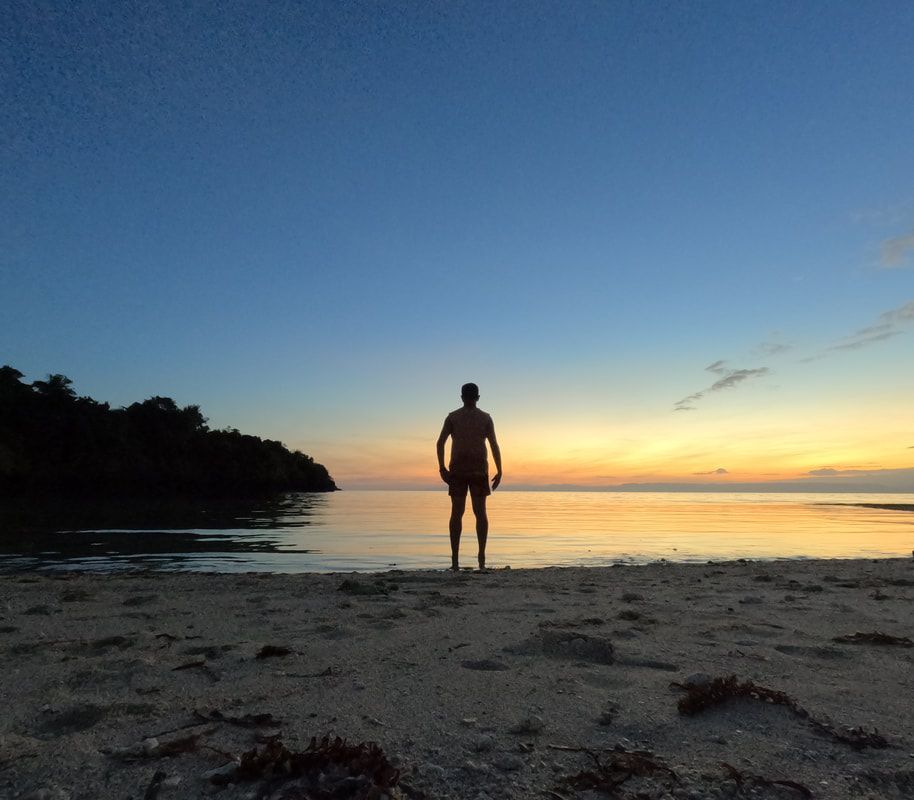 From the sea, we head up to the mountains of Iloilo on our next adventure. Tourism is a major industry in the Philippines. We have 7,100 islands to be proud of and that can feed millions of Filipinos. Creating a sustainable tourism program, building the RIGHT tourism infrastructures, and providing opportunities to its communities strengthens the industry. It takes political will power to be able to deliver these opportunities to its stakeholders. And that will power is rooted on the Filipino value of “malasakit”. A leader that has “malasakit” is what we need in this country. Check out my Islas de Gigantes travel video on my Youtube Travel Channel:
Getting there: Iloilo City is the main gateway of Islas de Gigantes, Carles, Iloilo. Major airlines have regular flights to Iloilo International Airport from major international and domestic airports in the country. From Iloilo City, Carles is around 3-4 hours by bus. For stress-free Islas de Gigantes Island hopping adventures, with pick-up in Iloilo City, you can get in touch with Rhett Paul Gigantes Island Tours and Services through their FB page here. You can also contact them at +63998 981 6812. #MahalinNatinAngPilipinas Shoutout to my travel buddies - HULL & STERN Dry Bags for keeping my stuff safe and dry during my travels. Get 5% off on your Hull & Stern dry bag purchase on the Hull & Stern website when you use the code - marc7del.
0 Comments
Leave a Reply. |
Marc del Rosario
I believe in education, entrepreneurship, and caring for the environment. 
Archives
October 2026
|


 RSS Feed